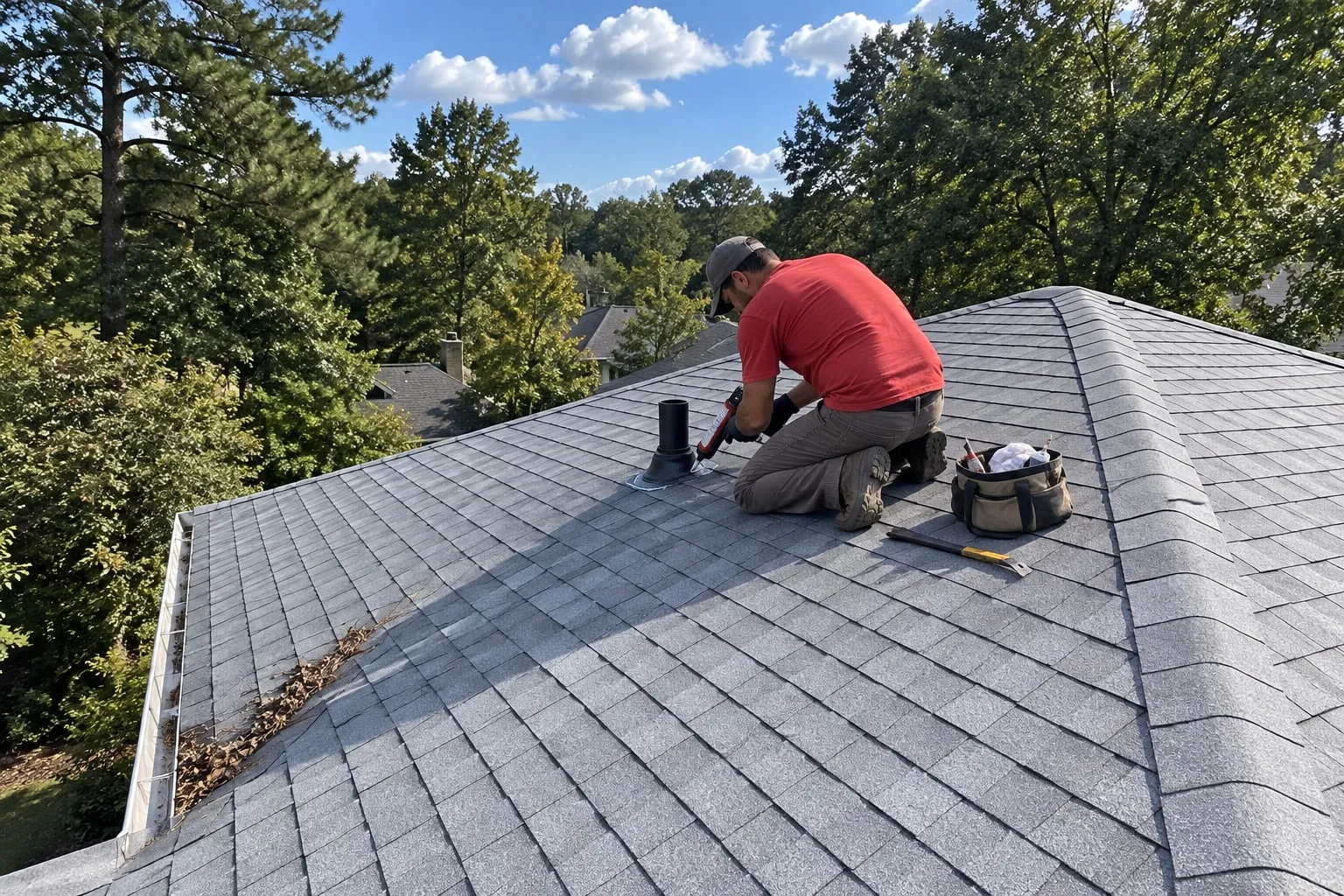

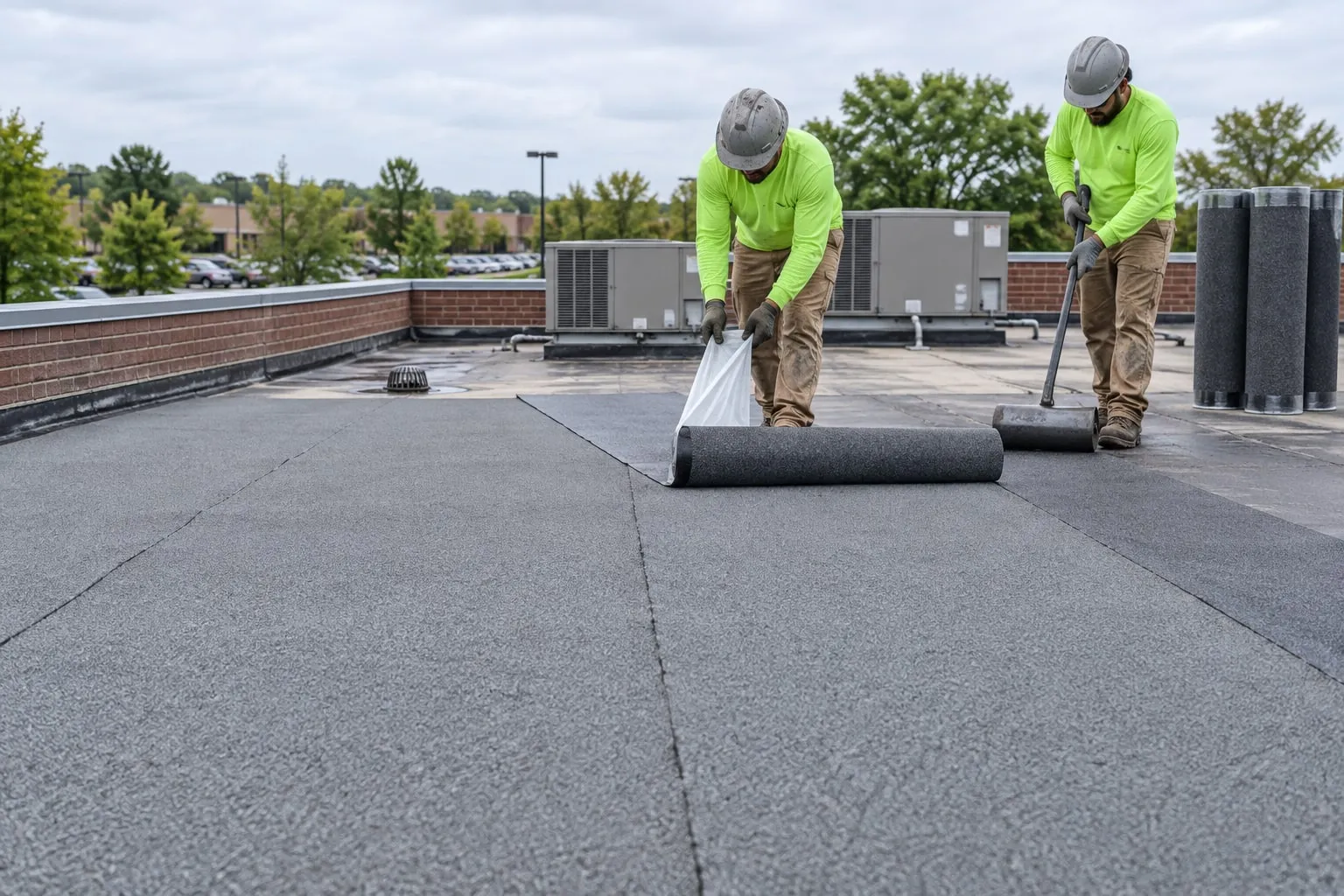



Storm damage roof inspection and repair in Atlanta, GA

Hail and wind can damage a roof before anything leaks. We inspect it free, photograph every hit and meet your adjuster on the roof. Your insurer decides what the policy covers.

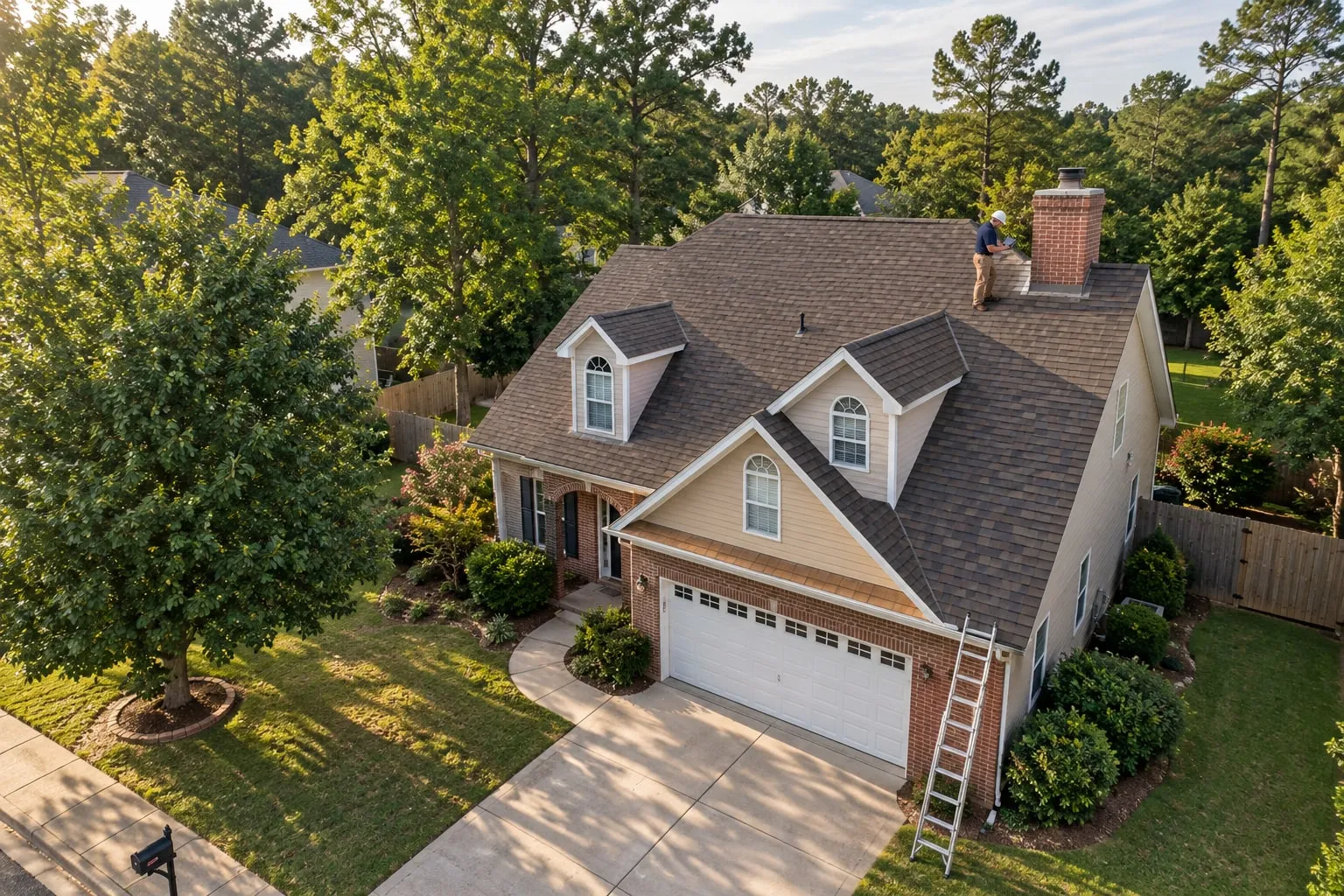
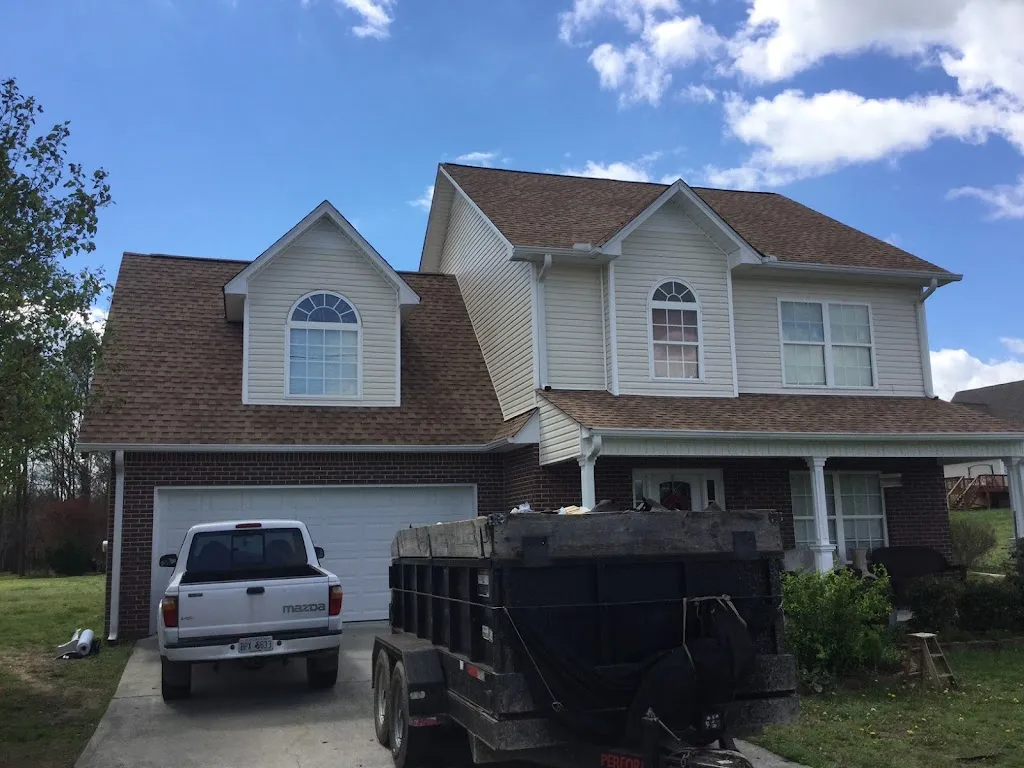
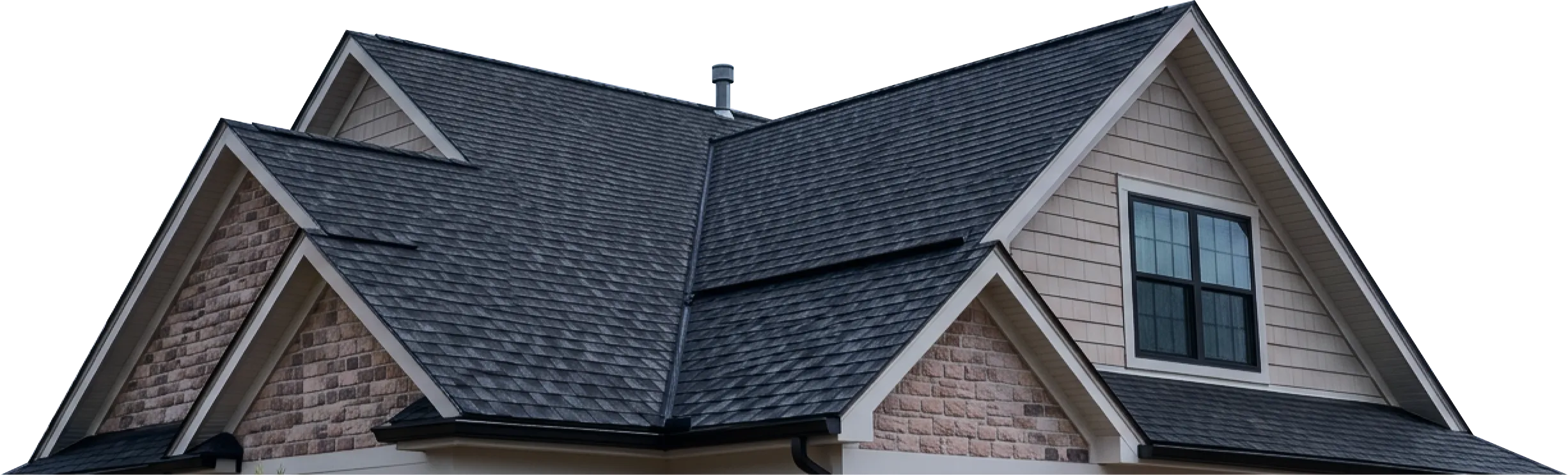
Architectural shingle roof on a brick and siding home

Know the signs

What storm damage actually looks like

The four ways metro Atlanta storms take out roofs, and what you can spot without leaving the ground.

  • 1 inch

    The hail size at which the National Weather Service calls a storm severe, along with gusts over 58 mph. Roofs take damage below that line too.

  • ~10×

    How much more likely shingles were to be damaged by a later severe hailstorm after a year of weather and repeated small hail, in IBHS lab tests.

  • Edges first

    Wind damage often starts when it gets under the roof edge and peels the covering back from there.

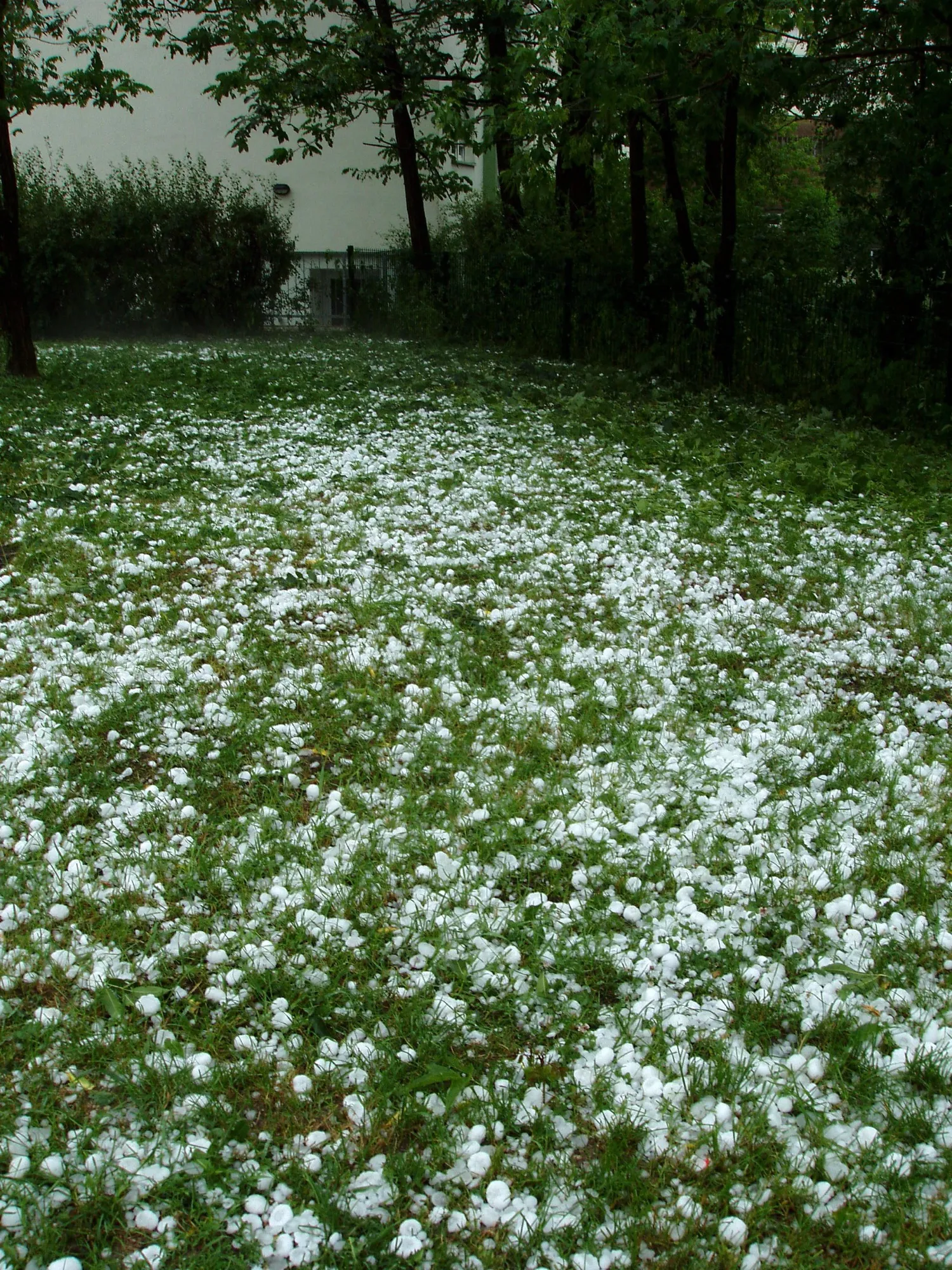
A lawn covered in hailstones after a storm
01

Hail

Bruised shingles and granules collecting in the gutters. Dents on vents, flashing and downspouts are the giveaway you can see from the driveway.

What you can see

  • Dents on gutters, downspouts, vents and metal flashing
  • Granules piled at the downspout outlets, like coarse black sand
  • Dings on cars, mailboxes and patio furniture from the same storm

What we find up close

  • Dark round spots where hail knocked the granules off
  • Bruises: a soft spot in the shingle mat that gives under a thumb
  • Cracked or split shingles, and splatter marks on vents and caps

Why it matters

Granules are the shingle’s sun shield. Where they are gone, the asphalt dries out and cracks years early. In IBHS tests, a series of small hailstones knocked off more granules in total than one 2-inch stone, and impact-resistant shingles did barely better than standard ones.
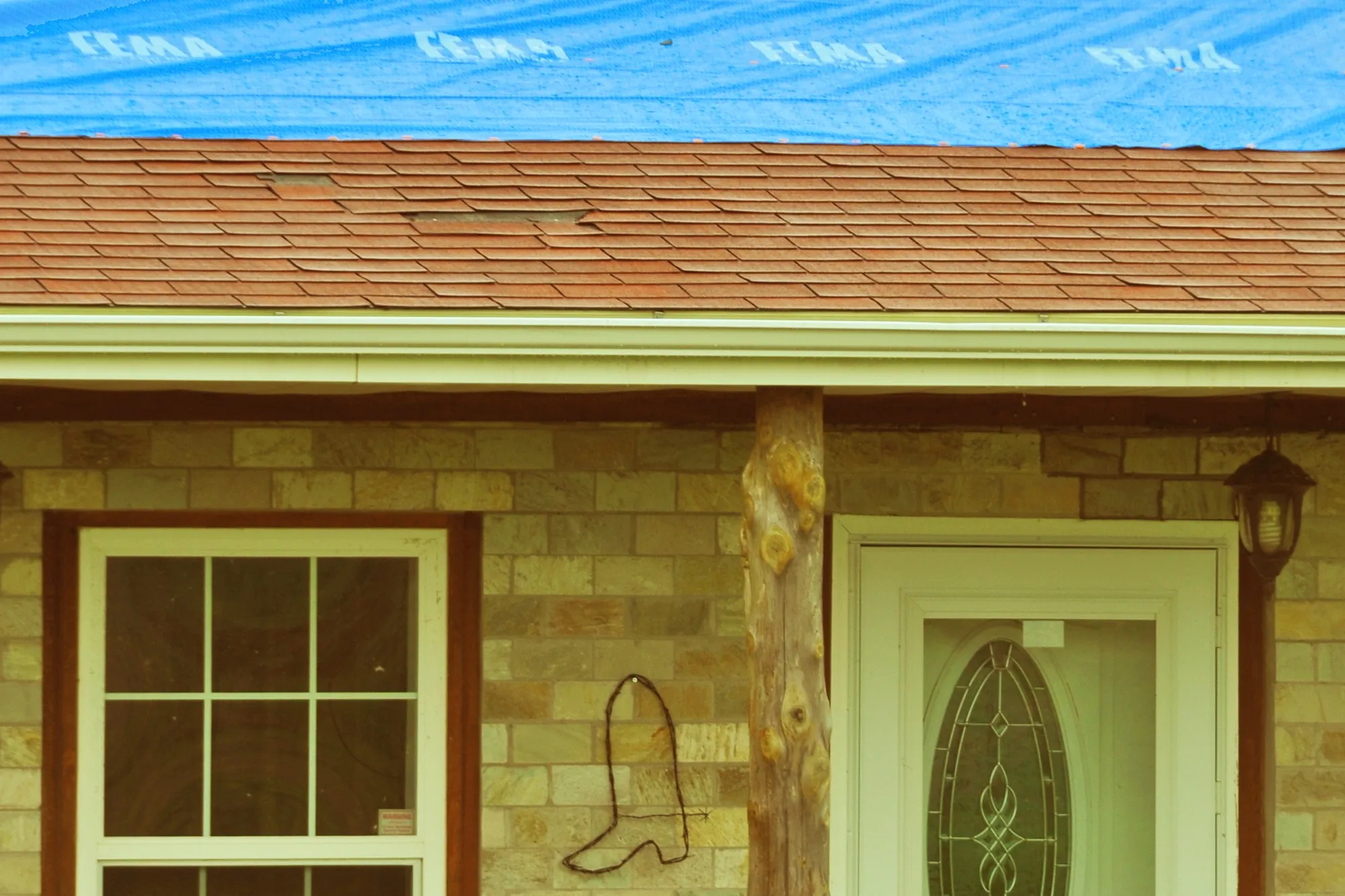
A blue tarp over a wind-damaged shingle roof
02

Wind

Creased, lifted or missing shingles, usually along ridges and edges. A crease breaks the seal even when the shingle stays on the roof.

What you can see

  • Shingles in the yard, or bare patches along ridges, eaves and rakes
  • Tabs that lift or flap in a breeze
  • Bent drip edge, or underlayment showing through

What we find up close

  • A straight crease across a shingle, near the nail line
  • Seal strips that have let go, so the shingle no longer sticks down
  • Nails backed out or pulled through the mat

Why it matters

A creased shingle has lost its grip even when it stays on the roof, and the next storm takes it. Wind works the edges first, so one loose row at the eave can turn into a bare section.

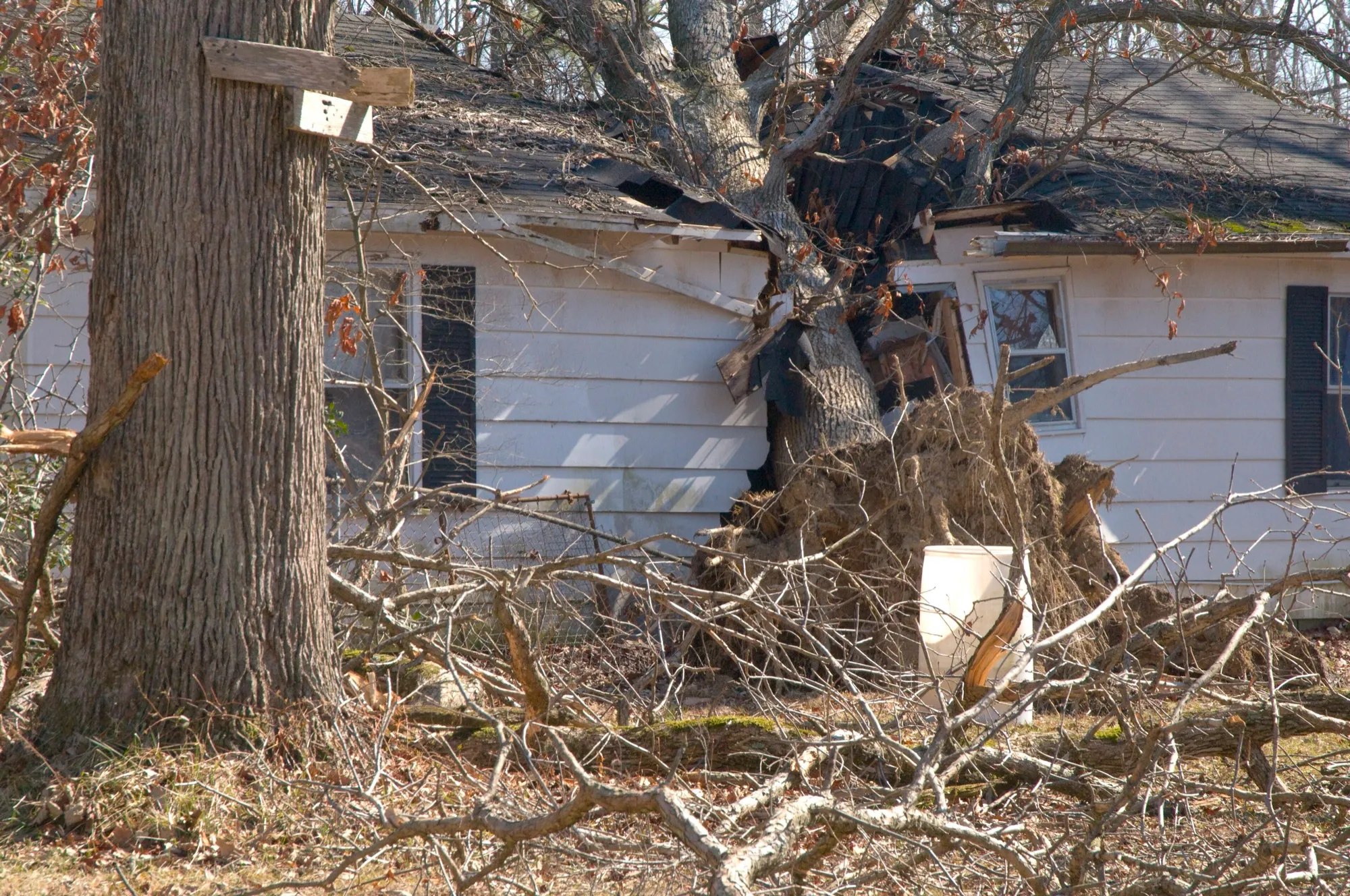
A fallen tree crushing the front of a house
03

Trees & limbs

Anything heavy enough to bounce off the roof can crack the decking underneath, even where the shingles on top look untouched.

What you can see

  • Limbs on the roof or hanging over it, broken or split
  • Gutters bent or torn loose where something came down
  • A line of broken or missing shingles where a branch dragged

What we find up close

  • Punctures through the shingles and underlayment
  • Cracked decking or a sag that was not there before
  • Damaged rafters or trusses under the point of impact

Why it matters

A heavy limb can crack the decking under shingles that look fine. Stay off the roof and leave the limb where it is until someone checks what it is holding up. The FAQ below covers who pays when it was a neighbor’s tree.

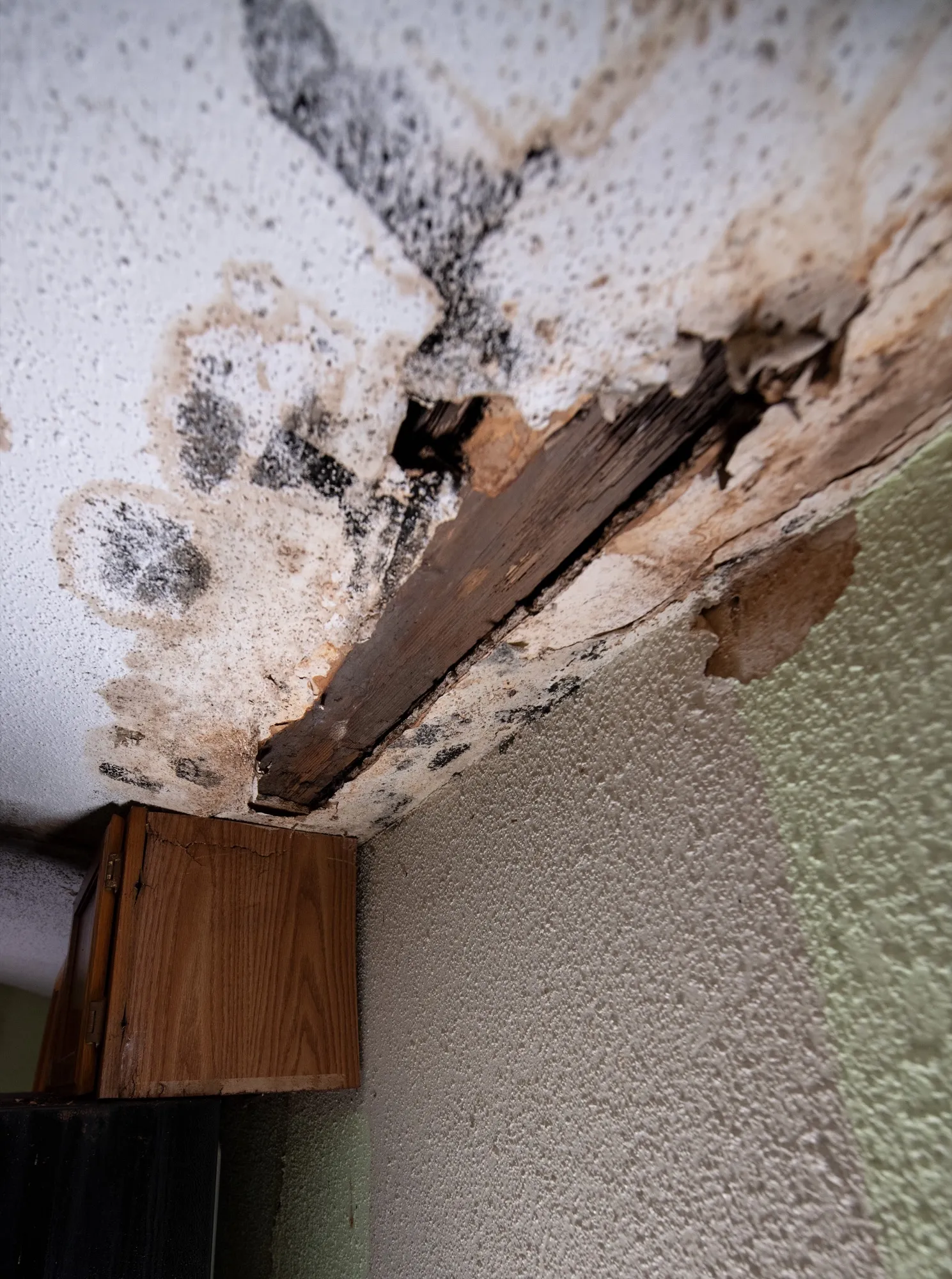
A stained, broken ceiling where storm water came through
04

Water inside

Ceiling stains, drips at light fixtures, a musty attic. By the time water shows up inside, the roof has been open for a while.

What you can see

  • Brown or yellow stains on ceilings and walls
  • Drips at light fixtures, bubbling paint or swollen trim
  • Daylight through the attic boards

What we find up close

  • Damp or matted insulation in the attic
  • Dark, wet decking around nails and seams
  • A musty smell, the early sign of mold

Why it matters

Water runs along rafters before it shows, so the stain is rarely under the hole. Photograph everything before you clean up: the claim needs it. Then get the roof covered fast, because wet insulation and decking keep getting worse.

Spotted one? Do it in order

From first call to finished roof

Evidence before the claim, the claim before the repair. Skip a step and the insurance company notices.

Book a free storm-damage inspection
  1. 01

    Inspect

    Call after the storm and we inspect the roof for free. Check what your policy asks of you too, since many set deadlines for reporting damage.

  2. 02

    Document

    Every hail hit, crease and exposed nail, photographed. The report is yours to keep whether you hire us or not.

  3. 03

    File the claim

    If the damage looks worth a claim, you file with your insurer, we help with the paperwork and we meet your adjuster on the roof to walk through what we found. If it does not, we say so and you keep the report.

  4. 04

    Repair

    The work in your written scope, with GAF materials. The schedule depends on the roof’s size and pitch, the weather and what we find, and you get the dates in writing. The yard gets the magnet sweep.

Insurance and your roof

What to expect from a claim

Policies vary. Deductibles, exclusions, actual cash value versus replacement cost, the roof’s age and the cause of the damage all shape a claim. Your insurance company decides coverage and payment.

What we do

  • Inspect the roof and photograph the damage
  • Write up the repair or replacement scope
  • Help with the claim paperwork
  • Meet your adjuster on the roof

What we don’t do

  • Promise a claim gets approved
  • Waive, cover or absorb your deductible
  • Tell you insurance will pay for everything
  • Ask you to sign over your claim

Right after the storm

  1. 1Stay off the roof, and away from downed lines and damaged trees.
  2. 2Photograph damage from a safe spot, and limit water coming inside where you can.
  3. 3Write down the storm date and when you first saw damage or a leak.
  4. 4Read your policy and call your insurer for claim instructions.
  5. 5Have a roofer inspect and document the roof.

Repair or replace after a storm?

Wind damage in one area can often be repaired if the shingles around it are sound. Damage across the roof, or wet and cracked decking, leads to a replacement conversation. What the roof needs and what the policy pays for are separate questions.

About roof repairAbout roof replacement

Not sure it was the storm?

Not every mark on a roof is storm damage, and policies typically don’t cover ordinary wear from age. If you want the roof’s overall condition checked, start with a roof inspection.

About roof inspections

Storm chasers

The trucks that follow the hail

After every big storm, out-of-town crews sweep the damaged neighborhoods, collect signatures and deductibles, and are gone before the first warranty call. Four tells, and what we do instead.

Tell

Storm chasers

Hill Top Roofing

01

Storm chasers

They knocked first

Door-to-door within hours of the hail, often with out-of-state plates. Roofers with local work do not need to canvass.

Hill Top Roofing

You call us

You call when you are ready, and the storm-damage inspection is free.

02

Storm chasers

They offer to "cover" your deductible

That money comes from somewhere: thinner materials, skipped steps, or an inflated invoice with your name on it.

Hill Top Roofing

We quote the real roof

The deductible is your share of the claim. Our quote says what the work costs, and nothing gets padded to hide it.

03

Storm chasers

Sign today or lose the deal

Pressure to sign a contract or assignment-of-benefits form on the first visit hands them your claim before you get a second opinion.

Hill Top Roofing

A report, not a contract

The first visit ends with a photo report that is yours to keep, whether you hire us or not.

04

Storm chasers

No address you can drive to

When the warranty call comes three winters from now, a phone number that still answers is the whole ballgame.

Hill Top Roofing

One address since 2008

2284 Old Concord Rd SE, Smyrna. Same shop, same phone number, local roofs to our name.

Someone already knocked? Call (770) 432-5169 for a second opinion before you sign anything.

Questions homeowners askafter a storm.

Something else on your mind? Call (770) 432-5169

Storm damage

What counts as storm damage on a roof?

Wind that creases or tears shingles, hail that bruises them, limbs that hit hard enough to crack decking, and the water that follows any of the three. Some of it shows from the ground; most of it does not, which is why the inspection is free. Not every mark is storm damage, though, and plain wear is not a covered loss, so the inspection sorts one from the other.

Should I wait until I see a leak?

No. A creased shingle or a hail bruise can take months to turn into a leak, and by then the decking may be wet. Having the roof checked soon after the storm also documents what it looked like right after, which matters if you file a claim.

Can I check for damage myself?

From the ground, yes. Look for granules collecting in the gutters, dents on vents, flashing and downspouts, and shingles that are creased, lifted or missing along the ridges and edges. Inside, check ceilings and the attic for stains or damp insulation. Stay off the roof itself: wet, hail-bruised shingles are slick, and walking on them can add damage of its own.

Is the inspection really free?

Yes. We get on the roof, photograph every hail hit, crease and exposed nail, and hand you the report. It is yours to keep whether you hire us or not.

A neighbor’s tree fell on my roof. Who pays?

Often your own homeowner’s policy, even though the tree was theirs, because many insurers treat a healthy tree blown down in a storm as nobody’s fault. A dead or leaning tree your neighbor knew about can change that. Your insurer makes the call. Either way, we photograph and document the damage so your adjuster sees what the storm did.

Insurance claims

Should I call my insurance company or a roofer first?

Read your policy first: many ask you to report damage promptly and set a deadline for filing. A free inspection tells you what the storm did to the roof, with photos, so you can talk to your insurer with the evidence in hand. Only your insurer can decide coverage. Don’t sign an agreement you don’t understand before the scope is clear.

Will my insurance cover the roof?

It depends on your policy, what caused the damage, your deductible and any exclusions, and your insurance company makes that decision, not a roofer. The roof’s age can matter too. Under actual-cash-value coverage, depreciation can lower the payment on an older roof; replacement-cost coverage generally pays to replace covered damage, under the policy’s terms. What we can do is document the damage with photos and walk the roof with your adjuster. If the damage does not look worth a claim, we tell you that too.

Do I still pay my deductible?

Yes. Your policy sets the deductible, and it is your share of the claim. A roofer who offers to waive or cover it finds that money somewhere: thinner materials, skipped steps, or an invoice that misstates the cost, which can cause legal and claim problems for you. Budget for the deductible and hire whoever quotes you honestly.

A roofer wants me to sign an assignment of benefits. Should I?

Not on the first visit, and not before a second opinion. An assignment of benefits hands your claim to the contractor: they deal with the insurer and get paid directly, and you lose a say in the scope and the price. A free inspection should never come with one attached.

Storm passed? Get the roof checked before the next one.

Free inspection, every hit photographed, and a report you keep.

Free estimate

Find out what your roof actually needs.

Step 1 of 3

The job

What do you need?

Type of property
Service

Rather talk it through? Call (770) 432-5169

Newsletter

Subscribe and get $750 off a new roof.

For a full roof replacement or new roof. One per household, can't be combined with other offers, and it doesn't expire.

No spam. Unsubscribe any time.