
Flat-roof leaks found and fixed before they reach the floor

Open seams, punctures, failed flashing and blocked drains on TPO, PVC and modified bitumen roofs. We find the source, fix it with matching material, and document the work.

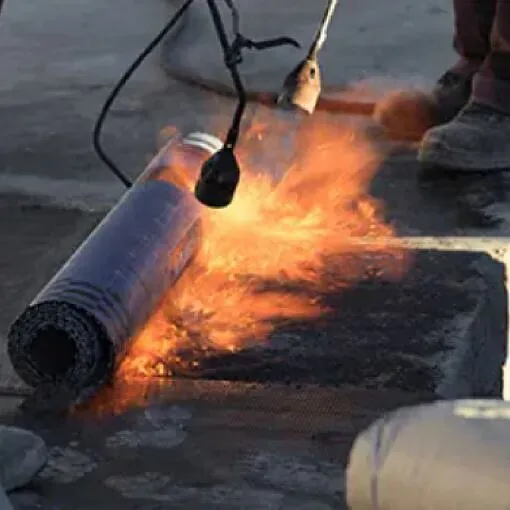
Roofer torching down a roll of modified bitumen on a flat roof

Commercial roof repair in metro Atlanta

Water on a flat roof does not run straight down. It travels under the membrane and through the insulation before it finds a gap in the deck, so the drip over the stockroom can be a long way from the hole. Patching above the drip rarely holds.

We trace the leak to its source, repair it with material that matches the roof, and tell you plainly how much life the rest of the roof has left.

What we repair

  • Open seams and laps

    Single-ply seams re-welded, modified bitumen laps resealed.

  • Punctures and tears

    From foot traffic, dropped tools, hail or fallen limbs, patched with matching membrane.

  • Flashing at walls, curbs and penetrations

    Where most flat-roof leaks start: around rooftop units, pipes, parapets and walls.

  • Drains and scuppers

    Clogged or failed drains cleared and re-flashed so water leaves the roof.

  • Blisters and wet areas

    Blisters cut out and patched, and wet insulation replaced before it spreads.

  • Edge metal and coping

    Loose perimeter metal fastened down before wind gets under the roof.

Repair or replace?

A repair makes sense when the problem is local and the rest of the membrane is sound. When wet insulation is spreading, seams are failing across the roof, or repairs are coming every season, a replacement or recover usually costs less over the next ten years. We show you the findings and quote both if it is close.
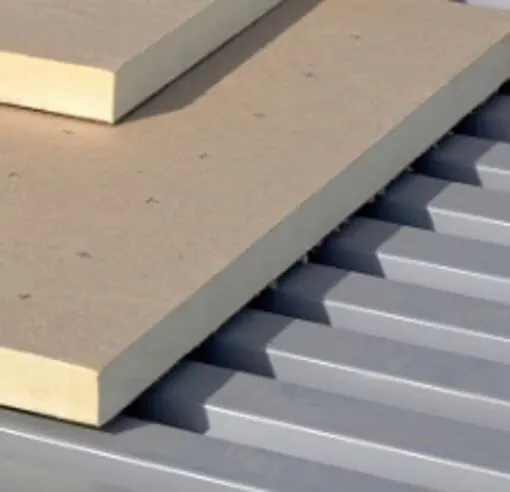
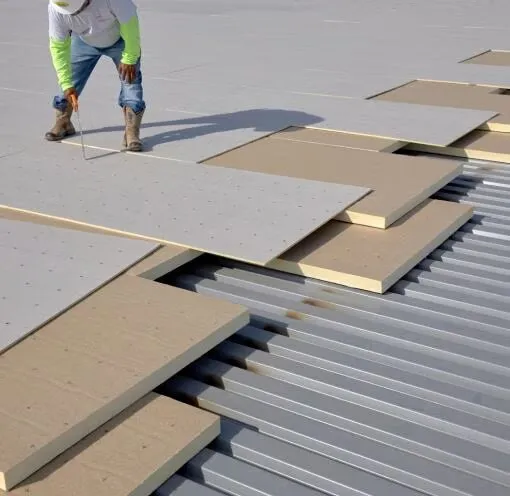
Polyiso insulation panels on a ribbed metal deck
Commercial roof replacement

Keep small problems small

Most flat-roof failures start as something minor: a clogged drain, a seam lifting at a unit curb, debris left after HVAC service. A walk-through after storms and once or twice a year catches them early.
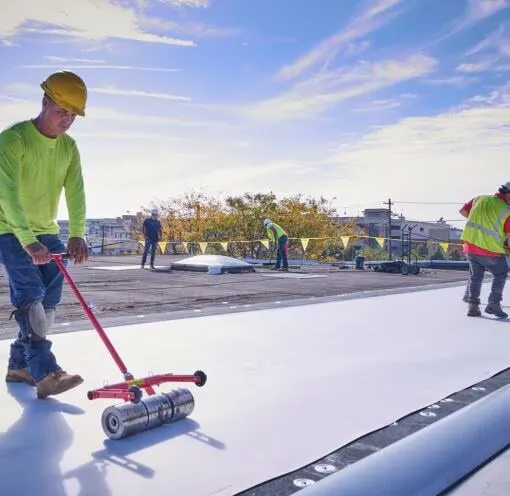
Roofers rolling heat-welded TPO seams

What’s included

What a commercial repair covers

Find it, fix it, prove it. Open any line for the detail.

The GAF systems we work on
  1. Roofer rolling the seams of a white PVC membrane

    Find

    01
    • Leak tracingFrom the interior drip back across the roof to the point where water gets in.

      We start where the water shows inside, then work across the roof checking seams, flashings and penetrations upslope of it. Wet insulation is located by feel and test cuts where needed.

    • Roof condition surveyA look at the whole roof while we are there, so you know what is coming next.

      You get a list of anything else that needs attention, ranked by urgency, so you can budget for it.

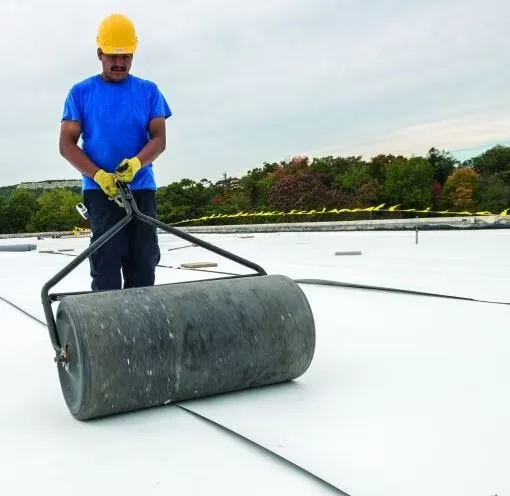
  2. Roofer rolling a heat-welded TPO seam

    Fix

    02
    • Membrane and seam repairMatching membrane welded or adhered over the damage, and failed seams resealed.

      On TPO and PVC, patches are heat-welded so they become part of the roof. On modified bitumen, damaged plies are cut out and rebuilt in layers.

    • Flashing and penetrationsNew flashing at curbs, pipes, walls and parapets where the old has failed.

      Sealant-only fixes around rooftop units are the most common repair we redo. We replace the flashing itself so the fix lasts.

    • Wet insulation replacementSaturated insulation cut out and replaced so water stops spreading under the membrane.

      Wet insulation will not dry out under a membrane. Leaving it means mold, deck rot and a larger repair later.

  3. Roofer working across cover boards on a flat roof

    Prove

    03
    • Before-and-after photosWhat we found and what we did, for your records and your insurer.

      Useful for property managers reporting to owners, and for any insurance claim if the damage came from a storm.

    • A written repair recordLocation, cause and repair, kept on file for the next time anyone is on the roof.

      A record of past repairs helps whoever works on the roof next, and helps you see when repairs are adding up to a replacement.

How it works

From your call to a dry building

Leaks on a business cost more every day they run. We keep it simple.

  1. 01

    Call us

    Tell us where water is showing and how bad it is. Active leaks go to the front of the line.

  2. 02

    Trace the source

    We get on the roof, find where water gets in, and photograph it.

  3. 03

    Quoted, then fixed

    A written number before work starts. Many repairs are done the same visit.

  4. 04

    Documented

    Photos and a written record of the repair, sent to you or your property manager.

What a commercial repair looks like

  • Priority

    Water coming in now moves you to the front of the schedule. Tell us where it shows when you call.

  • In writing

    A firm number once we have found the problem, before work starts. No open-ended hourly billing.

  • Matched

    Repairs in the same membrane as the roof, whether TPO, PVC or mod bit, so patches bond and last.

Next service

Commercial Roof Replacement

A new GAF TPO, PVC or modified bitumen roof for flat and low-slope buildings, scoped around your tenants and hours.

Questions homeowners askbefore they call.

Something else on your mind? Call (770) 432-5169

Commercial Roof Repair

Why does my flat roof leak far from where the water shows?

Water gets under the membrane and travels through the insulation and along the deck until it finds a gap. That is why we trace leaks from inside and out, instead of patching the spot above the drip.

Can you repair a roof another company installed?

Yes. We repair TPO, PVC and modified bitumen roofs regardless of who installed them. If the roof is still under a manufacturer guarantee, check its terms first, since some require repairs by an authorized contractor.

Is a coating a good fix?

A coating can extend a roof that is dry and sound underneath. Over wet insulation or failing seams it hides the problem rather than fixing it. We tell you which situation you are in.

How do I know if it is time to replace instead?

Spreading wet insulation, seams failing across the roof, and repairs every season are the usual signs. We show you the findings and quote both options when it is close.

Free estimate

Find out what your roof actually needs.

Step 1 of 3

The job

What do you need?

Type of property
Service

Rather talk it through? Call (770) 432-5169