Commercial roof systems: TPO, PVC & modified bitumen
A commercial roof is a system built around the building: its drainage, deck, rooftop equipment and use. Compare the GAF low-slope options, from the membrane on top to the insulation underneath.
How a commercial roof works
The deck carries the roof. Insulation holds the building’s temperature and can add slope. A cover board protects it. The membrane and its seams keep the water out, and flashing ties the roof to walls, curbs, drains and pipes, where most leaks start.
Choose the assembly, not the cheapest membrane on its own. Ask what sits under the top layer, how water will drain and what the existing roof allows.
GAF commercial products
01 · Membrane
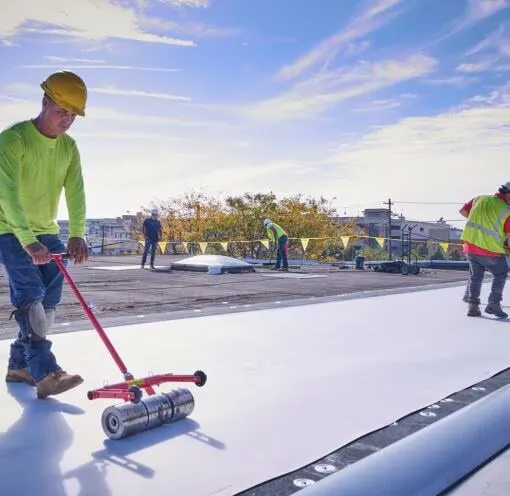
TPO
A heat-welded single-ply membrane and one of the most popular choices for low-slope roofs. Reflective colors can help with solar heat as part of the right assembly.
EverGuard TPO Smooth
Strong performance in a value-priced TPO system.
EverGuard SA TPO
Ready to install straight from the factory, with no separate adhesive.
EverGuard TPO Fleece-back
Made for recover systems, where the existing roof qualifies to stay in place.
EverGuard Extreme TPO Smooth
Next-generation TPO engineered for extreme applications.
Questions to ask
- How will the membrane be attached, and what thickness is proposed?
- What is the insulation plan, and the uplift rating of the whole assembly?
- How will penetrations and rooftop equipment be flashed?
01 · Membrane
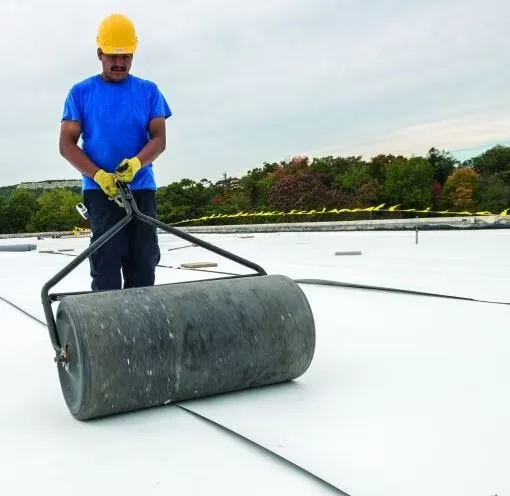
PVC
A heat-welded single-ply membrane. It can suit roofs exposed to grease or some chemicals, such as restaurant exhaust, once the manufacturer confirms compatibility. It is not better than TPO on every roof.
EverGuard PVC Smooth
Time-tested PVC for premium performance and durability. Mechanically attached, fully adhered or RhinoBond.
EverGuard PVC Fleece-back
For mechanically attached, ballasted or fully adhered systems.
EverGuard PVC XK Smooth
The XK membrane, for mechanically attached, ballasted or fully adhered systems.
EverGuard PVC XK Fleece-back
The XK membrane with a fleece backing, for the same systems.
Questions to ask
- What grease, chemicals or exhaust will reach the membrane?
- How is compatibility checked, and which attachment method fits?
- What detailing goes around equipment and transitions?
01 · Membrane
Modified bitumen
Asphalt membranes, built up in layers: flexible, impact resistant and strong. If the top layer is damaged, the ones below keep the water out. SBS and APP products install differently.
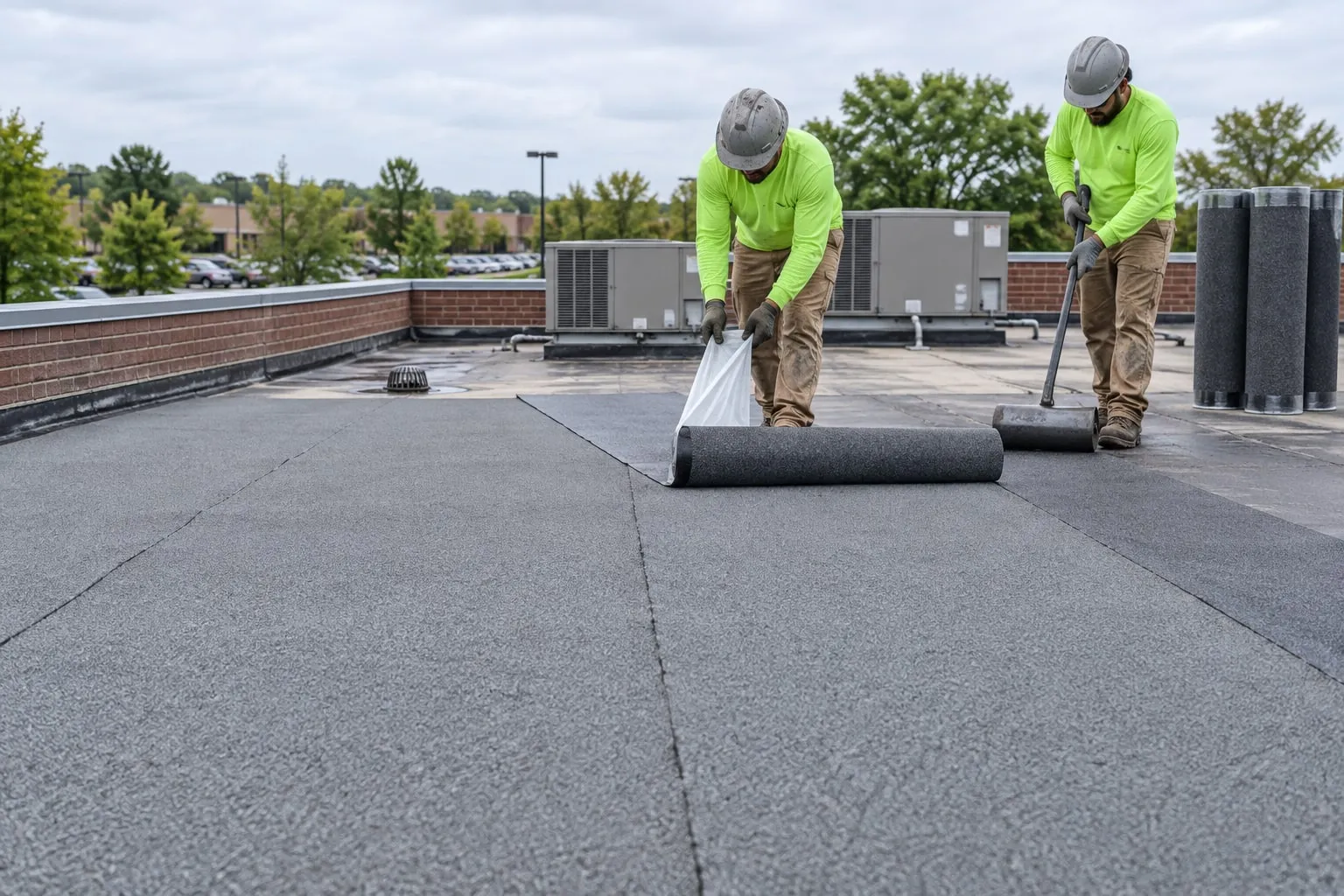
RUBEROID 20 Smooth
Reinforced with a fiberglass mat.
RUBEROID MOP Smooth 1.5
A non-woven polyester mat coated with flexible SBS-modified asphalt.
RUBEROID MOP Plus Smooth
A premium, heavy-duty modified bitumen membrane.
RUBEROID HW 25 Smooth
A non-woven glass mat coated with flexible polymer-modified asphalt.
Questions to ask
- Is the proposed assembly SBS or APP, and how many plies?
- Which install method is specified?
- How will penetrations, edges and transitions be handled?
02 · Cover board
Cover boards
A hard layer between the membrane and the insulation. Depending on the board, it adds thermal value and helps against fire, moisture and foot traffic. It is specified as part of the system.
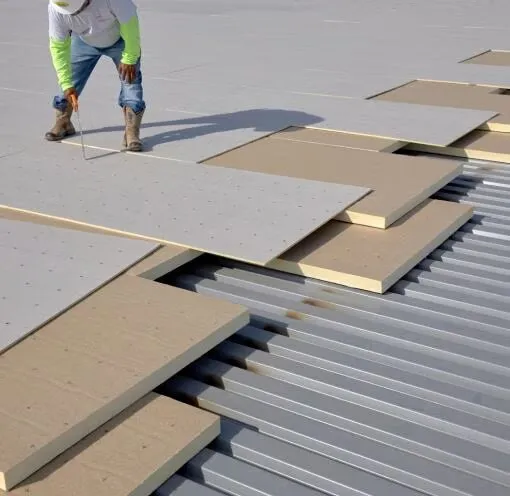
EnergyGuard HD & HD Plus
High-density polyiso with coated glass facers.
EnergyGuard NH HD Plus
Non-halogenated. Protects against moisture, foot traffic and weather.
EnergyGuard NH HD
Non-halogenated. Protects against moisture, foot traffic and weather.
EnergyGuard HD Barrier
Earns a UL 790 roof rating over combustible wood decks without a slip sheet.
03 · Insulation
Insulation
Polyiso panels hold the building’s temperature; thickness depends on the design and energy code. Tapered panels add slope where the roof needs to drain better.
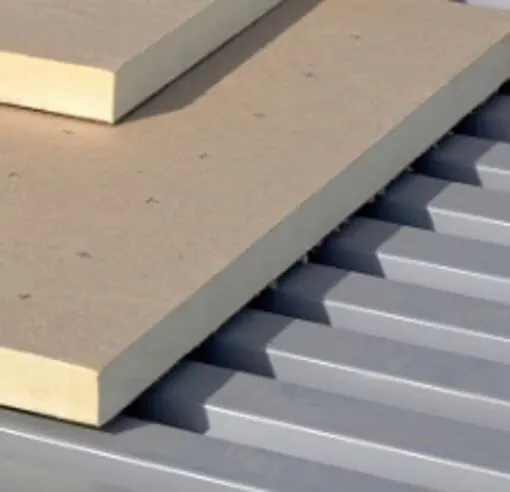
EnergyGuard Polyiso
Polyiso foam core with glass-reinforced felt facers.
EnergyGuard Tapered Polyiso
The same panel, sloped.
EnergyGuard Ultra Polyiso
Closed-cell polyiso core with durable coated glass facers.
EnergyGuard Ultra Tapered Polyiso
The Ultra panel, sloped.
How to choose
No single row decides it. The building and the manufacturer-approved assemblies do.
| Consideration | TPO | PVC | Modified bitumen |
|---|---|---|---|
| Type | Heat-welded single-ply | Heat-welded single-ply | Asphalt-based, in layers |
| What to check | Attachment, seams, insulation, exposure | Exposure compatibility, seams, attachment | Ply design, substrate, install method |
| Often discussed for | Reflectivity and assembly design | Grease or chemical exposure | Layered waterproofing and detailing |
| Watch for | Not all TPO assemblies are alike | Not every PVC fits every exposure | Products and install methods vary |
Guarantees
10–35 yrs
GAF’s published range for its commercial guarantees. The term depends on the products, the approved assembly, the installation and the contractor’s eligibility, so the top of the range doesn’t apply to every roof.
Ask first
Which manufacturer guarantee, if any, the exact system qualifies for. Our GAF Certified status is for residential roofing and doesn’t make a commercial roof eligible.
In writing
If a guarantee is part of a proposal, the scope names it. Read the guarantee document itself before you sign.
A selection of GAF’s most popular commercial products. Ask about the full line for your building.
Commercial roofing
Have a commercial roof question? Start with the building.
Tell us the property type, the roof system if you know it, and what you need solved. See commercial roof replacement, commercial roof repair or all commercial roofing.
Commercial roofmaterial questions.
Something else on your mind? Call (770) 432-5169
Materials
Does modified bitumen last longer than TPO?
There is no universal winner. Service life depends on the product, installation, climate, drainage, foot traffic and upkeep. Compare the specific assemblies and the written guarantee terms rather than judging by the material name.
Which roofing system is best for a restaurant?
It depends on rooftop exhaust, grease, chemical compatibility, equipment layout, drainage and fire or code requirements. Some PVC systems are worth a look, but the decision has to come from that roof.
Can existing insulation stay during a roof recover?
Only if it is dry, compatible and the new roof design allows it. Wet or unsuitable insulation comes out, and recover eligibility is checked against the code and the manufacturer’s requirements.
Why do commercial roofs need cover boards?
A cover board gives the membrane a firm surface over the insulation and can help it stand up to foot traffic and impact. The board chosen affects fire, impact and attachment performance, so it has to match the system.
What is tapered insulation on a flat roof?
Insulation cut at varying thickness to give a flat deck a slight slope, so water moves to the drains or scuppers. It is often part of the fix when ponding or poor drainage is the problem.